
This page is general relationship and wellbeing writing, not therapy, diagnosis, treatment, crisis support, legal advice, or a safety plan. Use qualified help for persistent distress, trauma, abuse, coercion, threats, self-harm, violence, or urgent safety concerns.
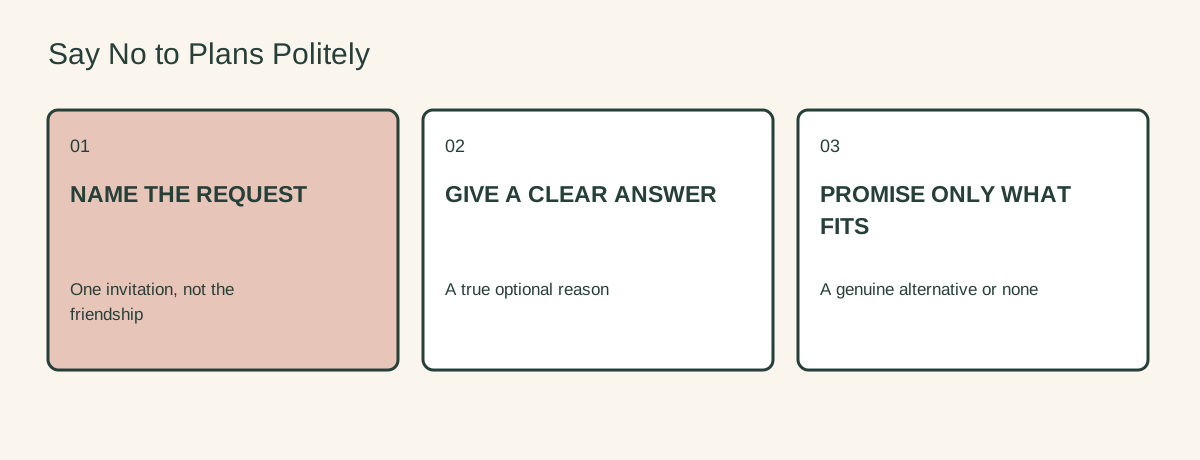
To say no politely to a friend's invitation, acknowledge the invitation and give a clear answer about the plan. Add a brief, true reason if you want to share one. Suggest another time only when you actually want to meet and can follow through. You cannot choose the other person's reaction, but you can avoid leaving them to interpret a vague maybe.
This note is about ordinary, safe invitations between friends. It is not a script for threats, coercion, abuse, an emergency or a situation where refusing could put you in danger. Those situations need appropriate trusted or qualified support, not a stronger version of the wording below.
Decide what you are declining
An invitation can contain several requests: attend dinner, stay overnight, drive someone home or help organise it. Before replying, name the part you can and cannot agree to. You may want to see the friend while declining a late night. Or you may simply not want the plan at all. Both need a clearer answer than several tentative alternatives.
If you genuinely need to check a commitment, give a realistic response time: “I need to check my plans. I'll answer by tomorrow afternoon.” This is a pause, not a hidden refusal. If your answer is already no, a direct reply is usually clearer than making the friend wait for a decision you have made.
Choose words that match your decision
The examples here are original editorial wording, not messages from real clients or a validated communication treatment. Adapt them to your voice and relationship.
| What you mean | Possible wording | Check before sending |
|---|---|---|
| No to this invitation | “Thanks for inviting me. I'm going to sit this one out.” | Does this clearly answer the plan? |
| No, with a reason you want to share | “Thanks for thinking of me. I need a quiet evening, so I won't join dinner.” | Is the reason true and comfortable to share? |
| No tonight, yes to a different plan | “I won't make the late show. Would you like to meet for lunch on Sunday?” | Do you want and have time for that lunch? |
| One part is possible | “I can join dinner, but I can't stay over or give lifts afterward.” | Have you named the actual limits? |
A reason does not need to become evidence for a trial. “I don't want to” can be truthful, while a warmer formulation may fit your relationship better. Do not invent illness, a work emergency or another person's demand to make an ordinary decision seem more legitimate.
Kindness does not require a replacement promise
Offering another date can be friendly when you want one. It can also create a new obligation you never intended. Before writing “another time,” decide whether you mean a specific invitation, an intention to reconnect later, or nothing more than discomfort with saying no.
If you do not have another plan to offer, end after the clear answer. You do not need to fill the space with a promise. If you want contact but cannot schedule it yet, say that accurately instead of offering a date you are unlikely to keep.
The Centre for Clinical Interventions' module on saying no describes brief, honest and polite refusal, and cautions that an alternative should reflect genuine willingness. It is general educational context. Our examples do not promise that every friendship will respond well.
When the friend asks again
A follow-up question may reflect a practical issue, such as a reservation count. Answer that issue if there is one: “Please don't include me in the booking.” If it is the same invitation again, a short restatement can keep the answer clear: “I know you'd like me there. I'm still sitting this one out.”
You do not have to add increasingly personal details to make the answer accepted. You also do not need to label the friend as manipulative because they feel disappointed. A feeling and a demand are different observations. Threats or unsafe pressure fall outside this ordinary conversation guide.
If you already agreed
Changing an existing agreement is different from declining a new invitation. Tell the friend promptly, acknowledge the disruption and discuss any actual commitments you made. Do not assume a new boundary erases shared tickets, booked travel or a responsibility another person relied on.
For an invented example: “I said I would drive on Saturday, and I need to change that. I'm sorry for the disruption. Can we discuss another transport arrangement today?” Whether you owe money or have contractual obligations depends on the facts; this article does not decide them.
Let the conversation end
After a clear answer, you may still feel uneasy. Rereading the message repeatedly will not tell you exactly what the friend thinks. Return to what you actually said and any response you actually received. No response yet is unknown, not proof of rejection.
Use the private reply-planning CSV to separate the request, decision, optional reason and any genuine alternative. It is a blank personal aid; do not upload private conversations to use it. For a workplace request, read saying I cannot take this on at work instead, where role expectations and commitments change the question.